A training that listens to you
We tailor it to your current level, your background, and your goals. We don't try to make you fit into a mold; we start with who you are.
Programmes / Improve your endurance
Improving your endurance allows you to run longer and gain speed over long distances by reducing your fatigue. With a Campus training plan, you’ve got everything you need!



The Campus Method draws on the experience of 600,000 runners and the analysis of 60 million kilometres run to provide effective, precise training plans tailored to each individual’s goals.

Building your endurance means learning to sustain effort without exhausting yourself. It’s not just about running for a long time, but about optimizing your pace management, your energy efficiency, and your ability to resist fatigue.
We often think endurance is only linked to cardio, but it also depends heavily on your muscles and the consistency of your training.
The Campus training plan will progressively strengthen your resistance, improve your comfort with effort, and help you push your limits week after week, so you can run longer without slowing down!
« Knowing how to run slowly is one of the keys to learning how to run fast. Once you understand that, nothing can stop you. " - Niko aka Running Addict
A methodology developed by expert coaches over the past five years. It's precise, intelligently tailored, and truly effective.
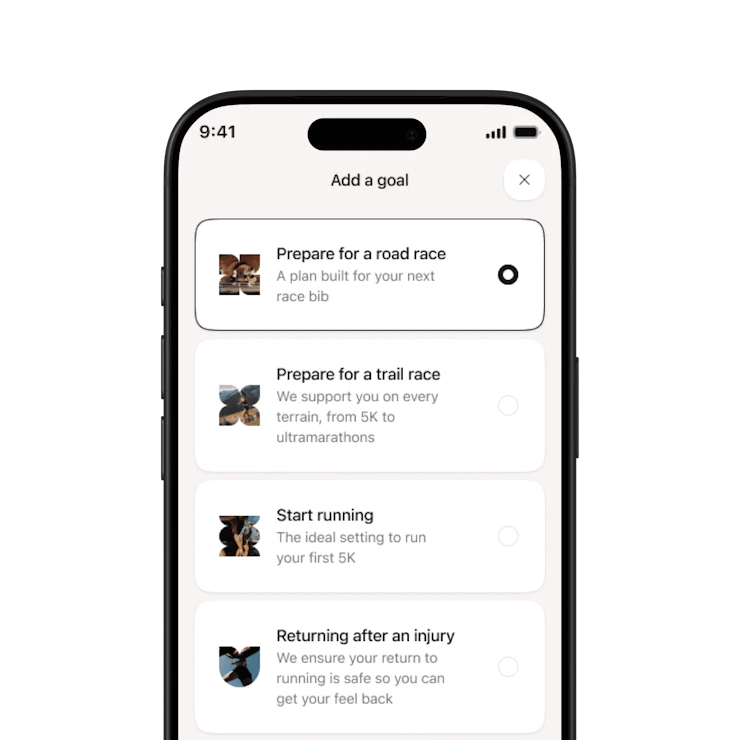
We tailor it to your current level, your background, and your goals. We don't try to make you fit into a mold; we start with who you are.
The workouts are tailored to your current fitness level. Something unexpected? The plan is recalculated so you can move forward without feeling guilty.

600,000 runners are already using Campus. A proven method, built on the analysis of 60 million kilometers of running, to help you progress.

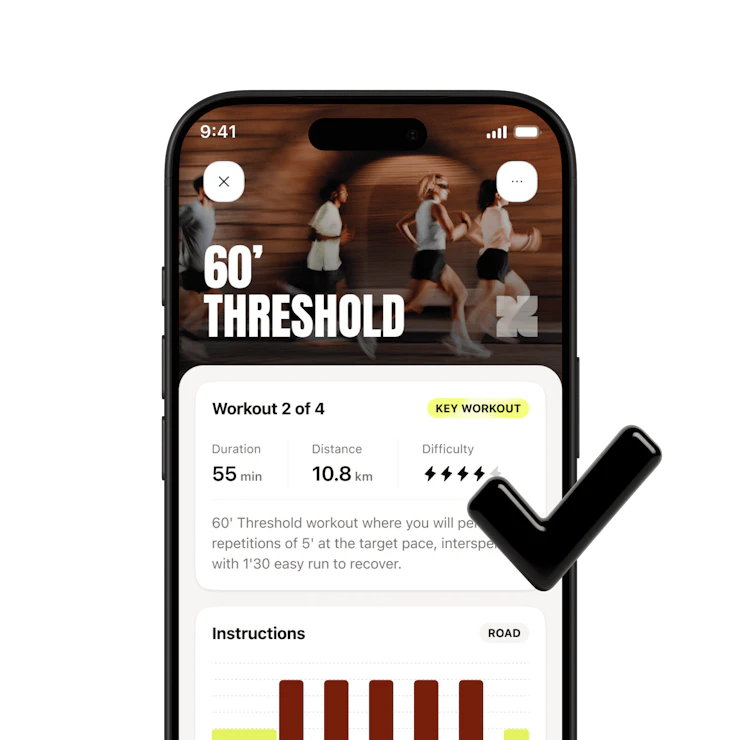
Campus offers several types of workouts to improve your running endurance. From easy endurance to long runs, including threshold work and strength & conditioning, everything is designed to help you run longer, more efficiently, and with less fatigue.

A vital foundation for your running training, base endurance involves running at around 75% of your maximum heart rate (MHR). It is at this fairly slow pace that you will build up your endurance.

Interval training, also known as split-set training, involves alternating between periods of sustained effort and recovery periods over one or more predetermined sets. The target pace, duration and recovery time vary depending on the aim of the workout.

A long run is a training session during which you run for longer than usual, mainly at a comfortable pace. It helps you build up your stamina and thus increase your ability to sustain exercise for longer and longer periods.

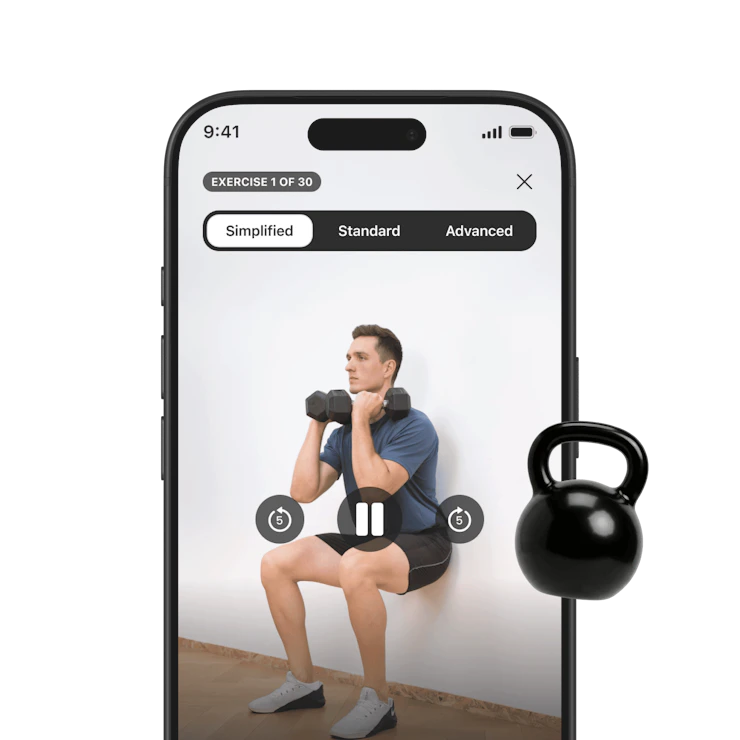
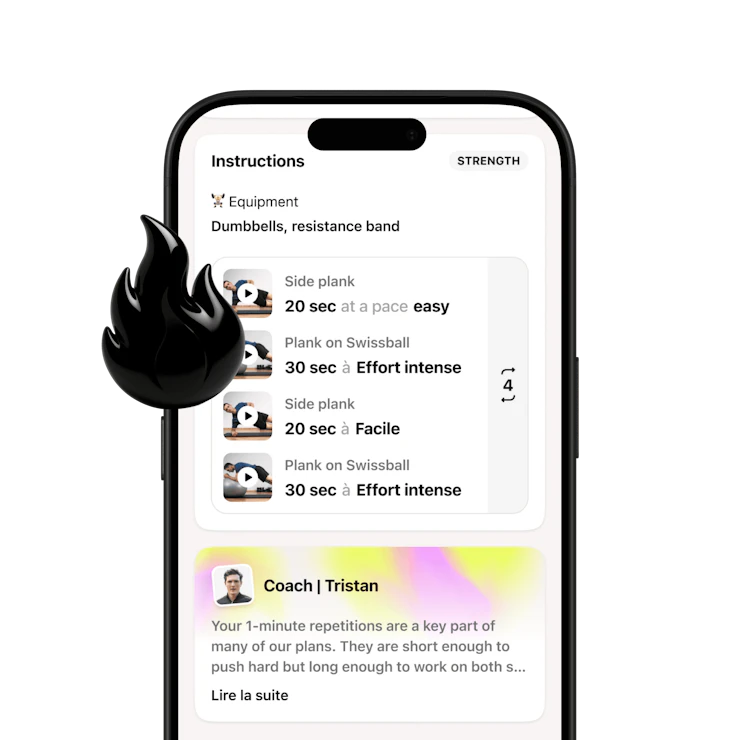
Strength & conditioning is a set of weight-bearing exercises designed to help you improve your running, reduce the risk of injury and look after your health. At Campus, we tailor the exercises to suit your profile and goals.
It’s about so much more than just running—we’re here for you even when your running shoes are in the closet.
Campus reduces your risk of injury by a factor of 3.7 compared to other methods. Your progress depends first and foremost on your ability to be consistent.



600,000 runners have already improved their performance using the Campus method. A proven training philosophy, refined through the analysis of 60 million kilometres of running.


Winner of the Yukon Arctic Ultra in 2025, 2nd at the Hardrock 100 in 2025, winner of La Diagonale des Fous in 2024, winner of the MaXi-Race in 2024, 2nd at the UTMB Mont Blanc in 2022.
"In my opinion, everyone, at their own level, should allow themselves adventures."


2h33 at the Valencia Marathon 2023, qualified for the Ironman 70.3 World Championship 2019, MaXi-Race 60 km finisher
"When you run, you prove to yourself that with willpower and perseverance, you can move mountains."


Qualification for Ironman Worlds 2023, finisher of the 7 Majors, finisher of the Norseman (black tee-shirt).
"A feeling of freedom acquired through the discipline of regular training. Quite a paradox (or maybe not so much)."
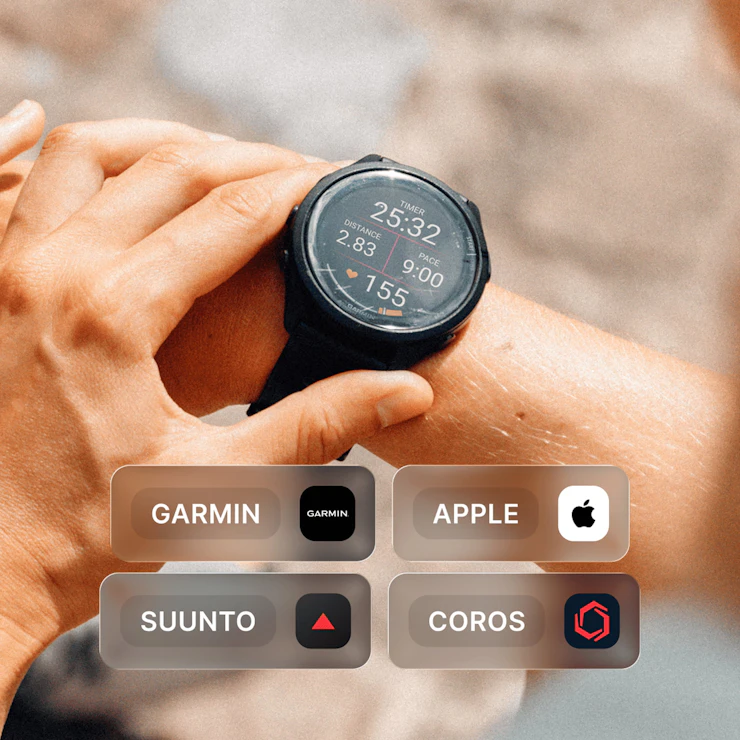
Your workouts are synced directly to your watch (Garmin, Coros, Suunto, Apple). Put on your shoes, press Start, and follow the beeps!
Ludivine
Very well made, this application allows you to prepare any running or trail goal... It is easy to use, you can track your progress, coaches are always at your disposal if you have questions or doubts... I have already prepared for a marathon with Campus... They helped me reach my goal without difficulty and I am starting over right now. I recommend this running and trail application!
Erwan
Fifty years old, hasn't run for 25 years, out of shape... After completing the free 5K plan, I have been following the paid 10K plan for 1 month, and I can now run for 1 hour. Far beyond my hopes... Good plan, cozy environment for beginners, but apparently suitable for addicts too.
Marion
Exactly the platform I needed to start running! The plans are top-notch, progressive, and tailored to your level and according to your goal. Campus coach is not just a site offering training plans; it's a community and a constantly evolving treasure trove of information!
Developing your endurance is essential to prepare for long-distance, but if you already have a specific race goal, it is more interesting for you to start directly with the plan suited to the distance.
Easy endurance runs, progressively longer long runs, and plenty of anaerobic threshold work to boost your resistance!
✅ Yes, with the Campus app, no need for a GPS watch to track your running workout.
The running activity tracker allows you to:
Track the distance covered in real-time
Know your instantaneous pace
Receive vocal or vibration alerts with each pace or phase change
Precisely visualize your effort and recovery intervals
Track specific indicators such as terrain type or pace variations (e.g., trail)
📱 All you need is your smartphone in your pocket to benefit from complete and precise tracking, without a GPS watch.
At Campus, you choose!
👉🏻 We guide you with the best recommendation to help you progress, but the freedom is in your hands. From 3 to 7 workouts per week, you adjust according to your habits or your preferences.
👉🏻 Your training plan is flexible, realistic, and effective, so you can train sustainably with enjoyment.
Yes, better endurance will allow you to maintain high intensity for longer, which is very important for both short and long distances!
Yes, especially for a beginner. Fast walking already builds the cardiovascular foundations. The transition to running happens naturally by alternating walking and running.
Easy endurance corresponds to a slow pace (in min/km) that lets you hold a conversation easily. It is said that you should stay in a zone below 75% of your maximum heart rate (MHR). It’s at this pace that you will build a good base for your endurance.
Running slowly means:
developing your aerobic system
improving your capillarization (development of the network of blood capillaries around your muscle fibers) for better oxygenation, energy efficiency, and waste removal.
Working on your running economy
It’s a bit like laying the foundations of a house: without that, everything else falls apart.
It's very simple: you should be able to hold a conversation without major breathlessness. In other words, you should not have to cut yourself off in the middle of a sentence to catch your breath abnormally.